It's not a bad gig, really -- I occasionally write blog posts for the Flynn Center (our most prominent local performing-arts venue), and they give me free tickets for the shows I blog about.
Most recently we got to see the one-night-only performance of the Broadway revival of Anything Goes! My pre-show writeup is here:
http://www.flynncenter.org/blog/2015/04/heaven-knows/
and the after-show was just posted here:
http://www.flynncenter.org/blog/2015/05/utterly-delightful/
Wednesday, May 6, 2015

Sunday, January 18, 2015
Book Blurb: Frances and Bernard, by Carlene Bauer
 Frances and Bernard by Carlene Bauer
My rating: 4 of 5 stars
When I picked this up to start reading, I didn't realize it was an epistolary novel. Not generally my favorite form of literature. But somehow this immediately took hold, and I thoroughly enjoyed it.
A large part, I think, is the characters. Frances and Bernard are exactly the sort of people I would love to engage with in this kind of long-term philosophical exchange. Based very loosely on Flannery O'Connor and Robert Lowell, these characters delight in sharing all manner of philosophy, theology, wit, and well-written correspondence that is exactly the kind of thing I'd get into myself. I have, in fact, had a few such epistolary acquaintances over the years, and this reminded me of the best of those times.
So it drew me right in. And these characters and their writings kept me engaged throughout the twists and turns of their lives. Really a delightful and engaging read.
View all my reviews
Monday, December 22, 2014
Book Blurb: The Bone Clocks by David Mitchell
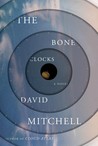 The Bone Clocks by David Mitchell
My rating: 4 of 5 stars
Following a scalding row with her mother, fifteen-year-old Holly Sykes slams the door on her old life. But Holly is no typical teenage runaway: a sensitive child once contacted by voices she knew only as “the radio people,” Holly is a lightning rod for psychic phenomena. Now, as she wanders deeper into the English countryside, visions and coincidences reorder her reality until they assume the aura of a nightmare brought to life.
For Holly has caught the attention of a cabal of dangerous mystics—and their enemies. But her lost weekend is merely the prelude to a shocking disappearance that leaves her family irrevocably scarred. This unsolved mystery will echo through every decade of Holly’s life, affecting all the people Holly loves—even the ones who are not yet born.
A Cambridge scholarship boy grooming himself for wealth and influence, a conflicted father who feels alive only while reporting from occupied Iraq, a middle-aged writer mourning his exile from the bestseller list—all have a part to play in this surreal, invisible war on the margins of our world. From the medieval Swiss Alps to the nineteenth-century Australian bush, from a hotel in Shanghai to a Manhattan townhouse in the near future, their stories come together in moments of everyday grace and extraordinary wonder.
I could have given this book the full five-star rating, and I still wonder if I'm being a little too hard on it. It's a wonderful book, well-written, gripping storyline, which kept my interest throughout -- except when it didn't. Its main drawback, I found, is something it has in common with other multi-POV narratives I've read; some characters just aren't as interesting as others.
Actually, this book doesn't just change its POV character every so often -- it also jumps ahead decades at a time. Each new section drops you into a whole new story: new characters, new time period, new setting, new circumstances. Only gradually does it start to tie it back to previous sections, and to the larger narrative. And most of the time it works fabulously. It's only a few instances where my interest started to lag, though even then the connection to the larger narrative kept me plodding on.
Over all, a very engaging read despite a few slow moments.
View all my reviews
Some Holiday Blogging
The Flynn Center is our local performing arts venue in Burlington. They put on many great shows throughout the year, and as an occasional contributor to their blog I'm able to see some of their shows for free (in exchange for blogging about the shows I see, of course.)
Most recently we saw the music group Sweet Honey in the Rock. My two posts for the show are on the blog now: one before the show:
http://www.flynncenter.org/blog/2014/12/sweet-honey-rock-sings-world/
And one after:
http://www.flynncenter.org/blog/2014/12/darkness-light-sweet-honey-rock/
Sunday, May 4, 2014
Book Blurbs: "Femme: A Nameless Detective Novella" by Bill Pronzini
 Femme by Bill Pronzini
My rating: 2 of 5 stars
This is the second Bill Pronzini book I've taken out of the library. The first -- I think it was Betrayers was a really enjoyable, tightly written mystery/thriller that left me wanting to read more.
The book was part of Pronzini's "Nameless Detective Agency" series. It's one of the only times I've seen detective literature deal with an agency of several detectives instead of the traditional solitary private-dick. Different chapters take different detectives as their point-of-view character, sometimes weaving back and forth between different cases that have little or nothing to do with each other. So the book came out feeling like a really well-written television serial, the kind that pulls you in and makes you want to keep watching.
Unfortunately, Femme seems to be where the series jumps the shark. It's shorter. It only focuses on two point-of-view characters, who are both working the same case -- a case either one of them should have been able to handle on his own. It builds up a lot at the beginning but never quite delivers on its promises.
The previous book I'd read was good enough that I'll give Pronzini, and his "Nameless Detective" series, another chance. But if I'd started with Femme, I can't say that I would have.
View all my reviews
Thursday, April 17, 2014
Kairos
A bit of short fiction for Holy Thursday.
I’m not really one of those hard-core Catholics. I don’t get into self-flagellation or anything; I don’t even raise a fist to my chest during the penitential rites. But I am on the parish council and I’m involved in various ministries, so I try to put in the facetime as often as I can.
This year has been especially difficult, and the people at church have kept me grounded. So I really kind of did want to be at that evening mass for Holy Thursday. It’s the kick-off for the Triduum – it starts the countdown to Easter and commemorates the night Jesus was abandoned by all his disciples. So if you’re at all prone to feeling guilty about missing a mass, this is the Big One.
But I’m lucky to have a job right now. I’d been laid off last summer, and nobody wants to hire a forty-seven year-old ex-middle-manager. So I’m here, watching the booth of a near-empty parking-garage, and counting it as a blessing.
My friend Claire is texting me from the church, giving me a play-by-play of the Mass. Singing the Kyrie. The choir is killing it! she texts. Or, My boys are really into the part where we all shout, ‘crucify him!’ Should I be worried? And later, Father Tom is washing my feet, immediately followed by, He says ‘hi’.
Claire and I met through the divorced-Catholics support group (my wife and I split up when we lost the house after I lost the job … I said it was a difficult year), and we quickly became the best of friends. Not in the way most people assume – neither of us is ready for that just yet. And it’s complicated by the whole Catholic thing, and by the “setting a good example for her adolescent boys” thing. Right now we’re just taking it one day at a time.
At eleven, Claire texts me that she’s going to bed. Can you not stay awake with me just one hour? I tease her. I’ve stayed with you three, she responds. That’s her last text for the night. At midnight I close up the garage and head for home.
“Home” at the moment is a dreary little efficiency at the edge of a questionable part of town. But when you’re unemployed for six months, you take what you can get. The streets are deserted, traffic lights set to blinking red at intersections, as I make the fifteen-minute walk.
Two blocks from home I see something – a shapeless, man-sized lump in the middle of a dead-end street. I keep an eye on it as I walk past, and notice that it is moving. As I watch it starts to look like a man struggling to pick himself up off the ground.
I come closer. The man is dirty and weathered, obviously homeless. Maybe he’s drunk or on drugs, maybe he’s sick or disabled. I don’t know how to tell the difference.
I help him to his feet. He can barely stand upright. I wonder what the hell I’m supposed to do with him.
Up the street there’s a shelter. Usually I’ll take the long way around, or cross the street when I have to pass the building. But tonight I haul my companion right up to the door. It’s slow going because he can barely stand and is just a lot of dead weight on my shoulder. For some reason it never occurs to me to just leave him on the sidewalk.
The shelter looks like any other old tenement building. The door is locked, and my knocking doesn’t do any good. The guy, whom I’ve left slumped on the front steps, begins to shake violently.
I grab him, try to calm him, try to stop his flailing, just try to do something, I don’t even know what. I shout and pound on the door. Someone up the street opens their window and yells at me to shut the fuck up.
A large, hairy, young guy opens a side door and looks at us. He asks me, “is he okay?” and I have no answer. The young guy takes the man from me and leads him inside. I go home.
I pour myself a glass of wine and try to relax. Before I turn in, I send a text to Claire. Spent some time with Jesus after all. Turns out, he’s awfully demanding.
Sunday, August 18, 2013
Book Blurb: Three Graphic Novels. House of Java; Feynman; Three Shadows
On the website GoodReads.com I've been briefly logging my thoughts about the books, comics, and graphic novels I've been reading. Here are a few recent entries.
 House of Java: Vol. 1
by Mark Murphy
 Feynman
by Jim Ottaviani (Goodreads Author), Leland Myrick (Goodreads Author)
 Three Shadows
by Cyril Pedrosa
by Mark Murphy
Jul 01, 13
A slim collection of short, slice-of-life comics -- not
stories so much as little vignettes, mostly centered on a Seattle coffee
shop and the people who frequent it. Interspersed within these
vignettes are longer stories, some of which work better than others. The
first of these long-form stories, "Rest Stop," seems decidedly out of
place among the low-key everyday kinds of character-driven narratives
that make up the rest of the book. "Rest Stop" feels as though it wanted
to be a kind of psychological thriller but lost interest somewhere
along the way. The rest of the stories, though, are enjoyable. I also
like the loose, sparsely elegant drawing style, which accents the feel
of quick sketches grabbed at the local coffee shop.
by Jim Ottaviani (Goodreads Author), Leland Myrick (Goodreads Author)
Jul 22, 13
I'm becoming quite a fan of Jim Ottaviani's graphic novels,
which focus on notable scientists and scientific achievements. I'd never
heard of Richard Feynman, but this book presents him as an intriguingly
eccentric sort of genius with a fondness for expressing quantum physics
principles using funny little pictures -- making him a natural subject
for a graphic novel.
At times the presentation of his physics lectures gets to be rather dense and hard to navigate. At least, I found it so for a few days when I came to it at the end of a long day and was probably more than a little too tired to wrap my head around these ideas. Feynman, at least as presented here, seems to take a kind of impish delight in accentuating the ways that physical laws at the quantum level simply don't conform to any of our usual expectations and common-sense. The funny little pictures ultimately make it easier to follow, I think, but it is more dense in places than the average comic-book.
by Cyril Pedrosa
It's difficult to say a lot about this story -- a kind of
allegorical fantasy about a family trying to avoid a dark, threatening
destiny (represented by the titular three shadows).
It shouldn't be much of a spoiler to say that the book is the author's response to the death of a friend's young son (the cover-flap says as much.) I saw where at least one reviewer questioned what exactly the story is saying about destiny and the necessity/futility of trying to change it. But I think it's a mistake to try and pin this story down to a "message". Instead, it should be taken as a kind of meditation, as the author's attempt to come to grips with unacceptable reality, to explain the unexplainable. The two parents in this book have very different responses, and ultimately neither is any better or worse than the other.
The artwork I found particularly engaging. It seems at times deceptively simple, almost haphazard in its loose sketchy quality, but there is a tight precision behind it all. It carries the story well without being distracting.
Subscribe to:
Posts (Atom)